
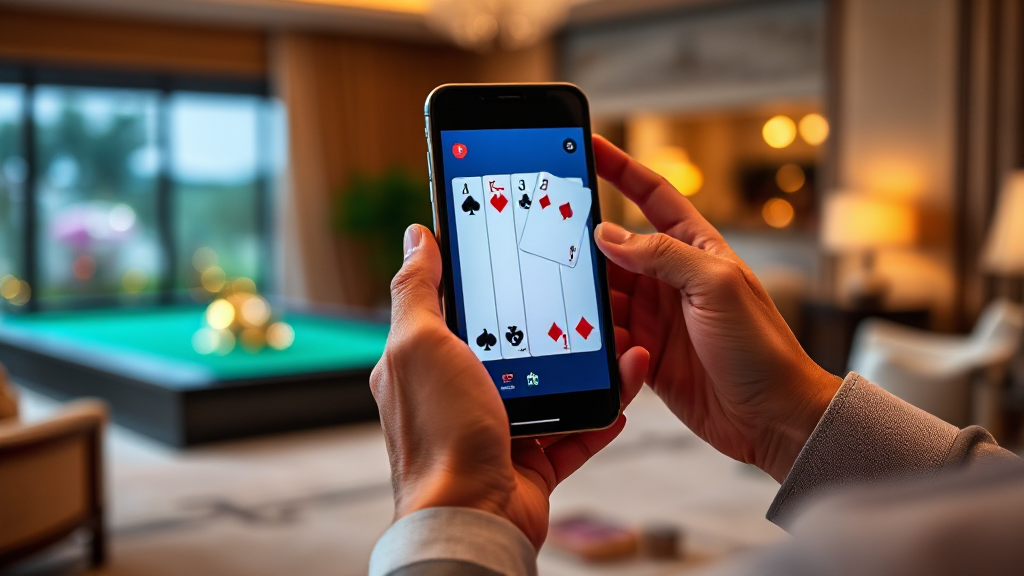
How to Get Comfortable With Your First Time Play Rummy Game
You have downloaded a rummy app, the lobby is open, and you are staring at a screen full of buttons you do not fully understand yet. That is the exact moment this checklist is written for. I teach beginners how to settle into their first sessions, and the biggest obstacle is rarely the rules themselves. It is the feeling of not knowing what to tap, when to tap it, and whether you are missing something obvious. If that sounds familiar, you are in the right place. This walkthrough is built as a question-and-answer checklist you can follow while you work through your First Time Play Rummy Game, one small decision at a time.
What should you check before you even open the app?
The first session goes much better when the boring setup is finished before you sit down to play. Start by confirming you meet the age requirement. Rummy apps are intended for adults 18 and over, and that is not a formality. If you are underage, stop here and come back later.
Next, look at your phone. Rummy apps are phone-first experiences, so a stable connection and enough battery matter more than most beginners expect. A dropped connection in the middle of a hand is frustrating and can cost you the round. Charge your device, or keep it plugged in, and connect to Wi-Fi if your mobile data is unreliable.
Then check the app itself. If you are comparing options, look at the bonus details, withdrawal information, and Android installation notes before you commit. A directory-style site can help you compare these side by side, which saves you from installing three apps just to find out which one fits your habits. The goal is not to find the perfect app. It is to find one you understand well enough to learn on.
Finally, decide on a small practice budget. Even if you are only playing free tables at first, knowing your limit ahead of time keeps the session relaxed. A beginner who is worried about spending too much cannot focus on learning the game.
Which rummy variant should a beginner actually start with?
Most first-timers should start with 13-card rummy, often called Indian rummy. It is the format you will see most often in mobile apps, and it is the one most tutorials and community discussions assume you already know.
Here is the short version of what you are doing. You receive 13 cards. You also see a closed deck, an open discard pile, and one joker card that changes each hand. Your job is to arrange your 13 cards into valid sets and sequences, then discard one card at the end of your turn. You can draw from either the closed deck or the open pile, and you must discard one card before your turn ends.
Two rules trip up almost every beginner. First, you need at least two sequences, and at least one of them must be a pure sequence with no joker involved. Second, a valid declaration usually requires you to discard a card onto the finished pile rather than simply showing your hand. Apps handle the final step for you, but you still need to understand why the declaration button is or is not lighting up.
If the app offers a points rummy or pool rummy table, ignore it for now. Those formats add scoring pressure that distracts from learning the basics. Stay in the simplest 13-card format until the flow of a turn feels automatic.
How do you read the table without panicking?
New players often lose track of the screen because they are trying to watch everything at once. Train yourself to look at four things in a fixed order.
First, check the open discard pile. The top card tells you what the previous player threw away, and that is a clue about what they did not need. Second, check your own hand and ask one question: does any card here complete a set or sequence I am already building? Third, check the closed deck count if the app shows it, because a nearly empty deck changes how aggressive you should be. Fourth, check the timer. Most apps give you a limited window to act, and beginners who overthink run out of time.
Do not try to memorize every card that has been discarded in your first few sessions. That skill comes later. For now, focus on your own hand and the single card in front of you on the open pile. A calm, narrow focus beats a scattered, wide one every time.
One more habit worth building early: sort your cards by suit and rank as soon as the hand is dealt. A sorted hand is easier to scan, and it makes potential sequences visible instead of hidden.
What is the right order of decisions on each turn?
Treat every turn as the same short checklist. It removes hesitation and keeps you from making rushed choices.
Step one: look at the open pile. Is the top card useful to a sequence or set you are already building? If yes, pick it up. If it is only vaguely interesting, leave it.
Step two: if the open card is not useful, draw from the closed deck. You do not get to see it first, but that is the trade-off for keeping your options hidden.
Step three: before you discard, look at your full hand again. Which card is doing the least work for you? That is usually your discard. Be careful not to throw away a card that completes a sequence you have not noticed yet.
Step four: discard one card. Your turn is over. Do not rush this step, because a careless discard can hand the next player exactly what they need.
Beginners often make the same mistake here: they pick up an interesting card from the open pile, then realize it does not fit anything and they have to discard something useful to make room. Only pick up a card if you can already see where it goes.
How do you know when your hand is ready to declare?
This is the question that causes the most anxiety in a first session, so let us slow it down.
A valid hand needs at least two sequences, and at least one of those must be a pure sequence made without any joker. On top of that, every remaining card in your hand must be part of a valid set or sequence. There is no room for stray cards.
When you think you are close, count your sequences out loud in your head. One pure sequence, one more sequence, then sets for the rest. If any card is left over, you are not ready. If the app shows a declaration button that is greyed out, that is your signal that something in the arrangement is invalid.
Do not declare just because you are tired of waiting. A wrong declaration usually costs you points, and in some formats it ends the game for you. Take the extra turn to fix the problem if you can.
If you are unsure, use the app’s practice or free-play mode to test declarations without any cost. That is exactly what practice tables are for, and experienced players use them more than beginners realize.
What mistakes should you expect to make in your first week?
Everyone makes these, so treat them as part of the learning curve rather than failures.
The most common mistake is discarding a card that was part of a sequence you had not finished building. It happens because beginners scan their hand too quickly. Slow down before you discard and look at the whole hand, not just the first few cards.
The second mistake is hoarding jokers. A joker is a tool, not a trophy. If it completes a sequence that gets you closer to a valid declaration, use it. Saving it for a hypothetical better hand usually costs you the round.
The third mistake is playing too many tables at once. It is tempting to open three games, but a beginner cannot track three hands at the same time. Play one table, finish it, then start another.
The fourth mistake is ignoring the timer. Most apps give you a set number of seconds per turn, and beginners who plan too long get auto-discarded. If you find yourself running out of time often, simplify your decision process rather than trying to think faster.
How should you manage time, money, and focus while learning?
Learning rummy is a skill, and like any skill it benefits from short, focused sessions rather than long, tired ones.
Set a timer before you start. Thirty to forty-five minutes is plenty for a beginner session. When the timer goes off, finish the current hand and stop. Fatigue makes you play worse, and it also makes you more likely to break your own budget rules.
Decide on a spending limit before you open the app, not after you have lost a hand. Treat that limit as fixed. If you reach it, close the app and come back another day. This is a basic responsible-play habit, and it is much easier to follow when you decide in advance.
Keep a small notes file on your phone. After each session, write down one thing you did well and one thing you want to improve. Maybe you noticed that you discard too quickly. Maybe you realized you keep forgetting to check the open pile. Over a week, those notes become a personal checklist that no generic tutorial can give you.
Finally, take breaks between sessions. Rummy rewards attention, and attention runs out. A fresh mind on a short session beats a tired mind on a long one.
Questions beginners ask before their first real session
Do I need to memorize all the rules before I start playing?
No. You need to understand the goal, the turn order, and the declaration requirement. Everything else you can learn by playing. Most apps also have a rules section built in, and reading it once before your first hand is enough to get started. The details will stick faster once you have seen them in action.
Is it better to play free tables or paid tables as a beginner?
Start with free or practice tables. They let you make mistakes without cost, and mistakes are how you learn. Once your turns feel automatic and you can consistently build a valid hand, you can decide whether paid tables fit your budget and comfort level. There is no rush.
How long does it usually take to feel comfortable with the game?
Most beginners start feeling comfortable after about five to ten short sessions. That is not a guarantee, because everyone learns at a different pace. The key is consistency. A few focused sessions spread across a week will teach you more than one long marathon session.
What should I do if I keep losing in my first week?
Losing early is normal. Instead of chasing wins, review what happened. Did you discard a card you needed? Did you miss a sequence on the open pile? Did you run out of time? Fix one habit at a time. Progress in rummy comes from small corrections, not from big leaps.
Can I compare different rummy apps before committing to one?
Yes, and it is a smart move. Bonus structures, withdrawal processes, and installation steps vary between apps. A comparison directory lets you review those details side by side before you install anything, which saves time and helps you pick an app that matches how you actually play.