
Reading the Signs: Early Warnings from Mauá SP Drains
You flush the toilet, and instead of the usual whoosh, the drain answers with a gurgle that sounds almost like a muttered complaint. That noise is not random—it is the first sentence in a conversation your plumbing is trying to have with you. In Mauá SP, where many homes share older clay or cast-iron lines with tree roots and heavy rainy-season runoff, those early signals are easy to ignore until a backup turns them into an emergency. Learning to interpret them is the difference between a quick fix and a flooded laundry room.
If you are already hearing multiple symptoms at once, it may be time to call a desentupidora Ribeirão Pires SP before the problem spreads to other fixtures. But for most households, the smarter move is to decode each warning first, understand its urgency, and then decide when to escalate. This guide walks through the sounds, smells, and slow drains that Mauá residents report most often, what each one likely means, and how quickly you should act.
Gurgling Drains: The Sound of Trapped Air
Gurgling is the most common early warning, and it usually happens when air cannot move freely through the vent stack or when water is struggling to pass a partial clog. When you flush a toilet and hear a bubble or gurgle from the sink, shower, or floor drain nearby, the waste line is asking for attention. The sound is essentially air being forced backward through the water trap because the pipe is partially blocked or the vent is restricted.
What it sounds like and where it appears
Listen for a low, throaty burp from a drain that has not been used in the last few minutes. It often follows a toilet flush or the end of a washing machine cycle. In Mauá homes with a shared vertical stack, the gurgle may come from the bathroom sink while the toilet is still refilling. If the sound repeats every time water runs, the blockage is likely close to the fixture or in the branch line.
Likely cause and urgency level
Most gurgling points to a partial clog made of soap scum, hair, grease, or paper that has collected on the pipe wall. It can also signal a blocked vent pipe on the roof, especially after heavy rain or if birds have nested in the opening. Gurgling alone is a moderate warning—not an emergency, but not something to leave for months. If it appears alongside slow draining, treat it as a sign that the clog is growing.
Slow Drains: When Water Takes Its Time
A sink that empties in ten seconds instead of two is easy to dismiss, but slow drainage is one of the most reliable predictors of a full blockage. In Mauá SP, older homes often have galvanized steel pipes that corrode internally, narrowing the passage until even water without debris struggles to pass. The slowdown may start in one fixture and gradually affect others on the same line.
What it looks like and how to test it
Fill the basin with a few liters of water and watch how long it takes to disappear. If the water level rises when you run the faucet, or if a nearby floor drain backs up slightly, the clog is deeper than the trap. A single slow drain can often be cleared with a plunger or a hand snake, but multiple slow drains on the same floor suggest a main-line issue.
Likely cause and urgency level
Kitchen sinks slow down from grease and food particles that congeal as they cool. Bathroom sinks collect hair and soap residue. Floor drains in laundry areas gather lint and sediment. In Mauá, the rain season adds another factor: stormwater infiltration into cracked pipes can carry sand and silt that settle and harden. Slow drains are a moderate-to-high warning—if two or more fixtures are affected, schedule a professional inspection before a backup occurs.
Odors: The Smell That Should Not Be There
A persistent sewer smell in a bathroom or kitchen is more than unpleasant—it is a signal that the water trap has dried out, the vent is blocked, or waste is sitting in the pipe. In Mauá SP, where many houses have floor drains in service areas that are rarely used, the trap can evaporate during dry weeks, allowing gases to rise. The odor may be strongest near the floor drain or under the kitchen sink.
What it smells like and where it lingers
Hydrogen sulfide—the rotten-egg smell—is the classic indicator. It may appear only when water runs, or it may hang in the room constantly. If the smell is stronger after flushing or after a washing machine drains, the issue is likely in the waste line rather than the trap. A musty, earthy odor can also point to a cracked pipe under the floor slab, especially in older constructions.
Likely cause and urgency level
Dry traps are the simplest fix: pour a liter of water down the drain to restore the seal. Blocked vents require a professional to clear the roof opening. Persistent sewer gas is a health concern and a sign of a real blockage or break—treat it as a high-priority warning. If the smell is accompanied by slow drains or gurgling, the problem is almost certainly a clog that needs mechanical removal.
Backups: When the System Speaks Loudly
A backup is the drain’s final warning before failure. It might be a toilet that overflows when flushed, a floor drain that bubbles up dirty water, or a sink that refuses to drain at all. In Mauá SP, backups often occur during heavy rain when the municipal sewer system is overloaded, but they can also happen on a dry day if the private line is blocked.
What it looks like and where it starts
The first sign is usually water rising in a fixture you did not use—a shower tray filling when the toilet flushes, or a laundry sink backing up when the kitchen sink drains. If the backup contains paper or solid waste, the clog is in the main line. If it is mostly clear water, it may be a vent issue or a partial blockage further downstream.
Likely cause and urgency level
Tree roots are the most common culprit in older Mauá neighborhoods, followed by grease buildup and collapsed pipe sections. A backup is an emergency—stop using water immediately and call a desentupidora Ribeirão Pires for emergency service. Continuing to flush or run water will only push more waste into the blocked section and increase the cleanup cost.
When to Escalate: From Observation to Action
Not every gurgle requires a truck and a crew, but some combinations do. The key is to track how many symptoms appear and whether they are getting worse. A single slow drain that responds to a plunger is a minor event. A gurgle plus a slow drain plus an odor is a pattern that points to a main-line obstruction.
Simple steps you can take first
- Pour a bucket of hot (not boiling) water down the slow drain to melt grease.
- Use a plunger with a good seal for sinks and toilets—ten firm pushes can dislodge a soft clog.
- Check the floor drain trap by removing the grate and clearing visible debris.
- Pour water into unused floor drains once a week to keep the trap seal intact.
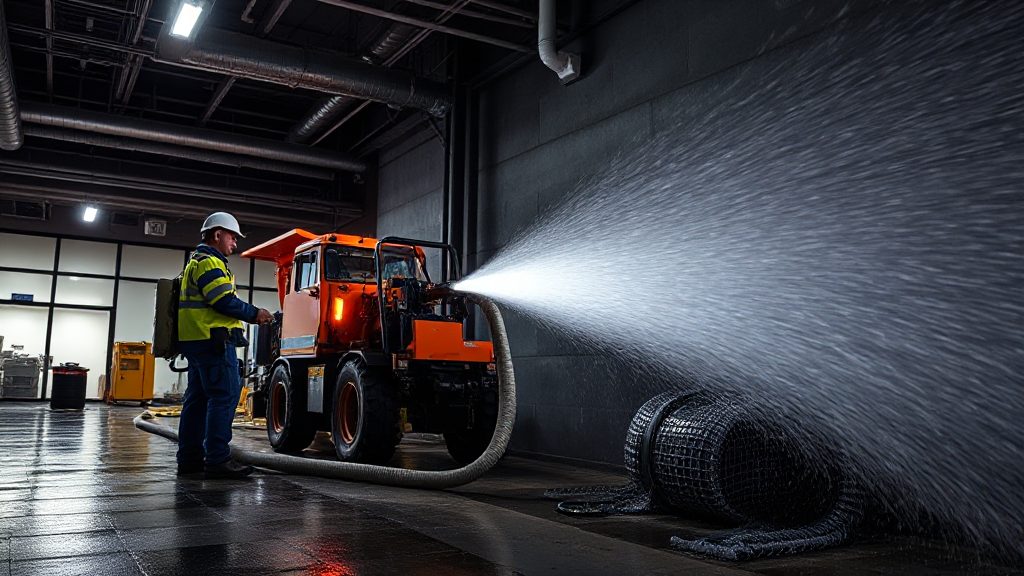
If these steps do not restore normal flow within a day, or if the problem returns within a week, the clog is deeper than a hand tool can reach. At that point, a professional inspection with a camera or a hydro-jetting service is the practical next step. For residents comparing options, a local desentupidora em Ribeirão Pires SP can assess whether the issue is in the private line or the public system, which changes who is responsible for the repair.
Urgency summary for Mauá households
| Symptom | Typical cause | Urgency |
|---|---|---|
| Occasional gurgle | Partial clog or vent restriction | Monitor for a week |
| One slow drain | Local grease or hair clog | Try DIY; call if it persists |
| Multiple slow drains | Main-line blockage | Schedule service within days |
| Persistent sewer odor | Dry trap or blocked vent | Fix trap; call if odor remains |
| Backup with waste | Roots, collapse, or heavy clog | Emergency—stop water use |
Reading these signs early is not about becoming a plumber—it is about knowing when a small noise is telling you something bigger. In Mauá SP, where the plumbing stock is aging and the rainy season is intense, that skill protects your home and your budget. Pay attention to the gurgle, the slow drain, and the smell; they are the language your pipes use before they fail. When the message becomes clear, act quickly and call a professional who knows the local network and can respond before the warning turns into a flood.
 admin