
How Long a Drain Unclogging Job Takes in Saúde, São Paulo
If you are dealing with a backed-up sink, shower or floor drain in the Saúde district of São Paulo, the short answer is that most residential clogs are cleared in one to three hours. Simple blockages near the fixture can be solved in under an hour, while stubborn main-line or grease-heavy problems may take a full morning or afternoon. The exact time depends on where the blockage sits, how old the pipes are and whether the technician has to bring in a hydro-jetting truck. This short guide walks you through what actually happens on site, so a first-timer knows what to expect from a desentupidora em Saúde São Paulo SP.
What Usually Happens When You Call a Desentupidora Saúde
When you call a desentupidora Saúde, the first contact is usually a short phone triage. The attendant asks what is backing up, whether water is rising in more than one fixture and whether the property is a house, apartment or commercial unit. That information tells the team which equipment to load: a manual auger, an electric snake, a high-pressure jetter or a vacuum truck. In Saúde, many buildings are older and share vertical stacks, so a single clogged apartment can affect neighbors above and below. Expect the team to arrive with a uniformed technician and, for heavier jobs, a small truck parked on the nearest permitted street.
Comparing the Main Types of Drain Blockages
Not every clog behaves the same way, and the method used changes the time on site. Here is a prose comparison of the four situations you are most likely to face.
| Blockage type | Typical location | Usual method | Estimated time |
|---|---|---|---|
| Fixture clog | Sink, shower, toilet | Manual auger or small electric snake | 30 to 60 minutes |
| Branch line clog | Kitchen or bathroom drain line | Electric snake with cutting head | 1 to 2 hours |
| Main line clog | Building stack or yard line | Hydro-jetting or heavy cable | 2 to 4 hours |
| Grease or root intrusion | Restaurant or old garden line | Hydro-jetting plus camera inspection | Half day or more |
A fixture clog is the easiest case. A branch line takes longer because the technician has to reach the vent or a cleanout. Main-line blockages often require a hydro-jetter, which uses pressurized water to scour the pipe wall rather than just punch a hole through the debris. Grease and tree roots are the slowest because the pipe needs repeated passes and, ideally, a camera check afterward.
Step by Step: What the Technician Does First
A trained technician follows a predictable sequence, and knowing it helps you prepare.
- Inspect the affected fixtures to see how many are backing up and whether the water is clear or dark.
- Locate the cleanout or access point, which may be in a utility area, outside the unit or on the roof.
- Protect the floor and nearby surfaces with covers before any water is moved.
- Insert the appropriate tool and work the blockage gradually, checking flow as the line opens.
- Flush the line with clean water and confirm that drains empty at normal speed.
- Recommend a follow-up if the pipe showed signs of grease buildup, roots or collapsed sections.
Skipping the inspection step is one of the most common beginner mistakes. A technician who starts snaking without checking which fixtures are affected may open a small clog while missing a larger blockage downstream.
Tools You Will See on a First Visit
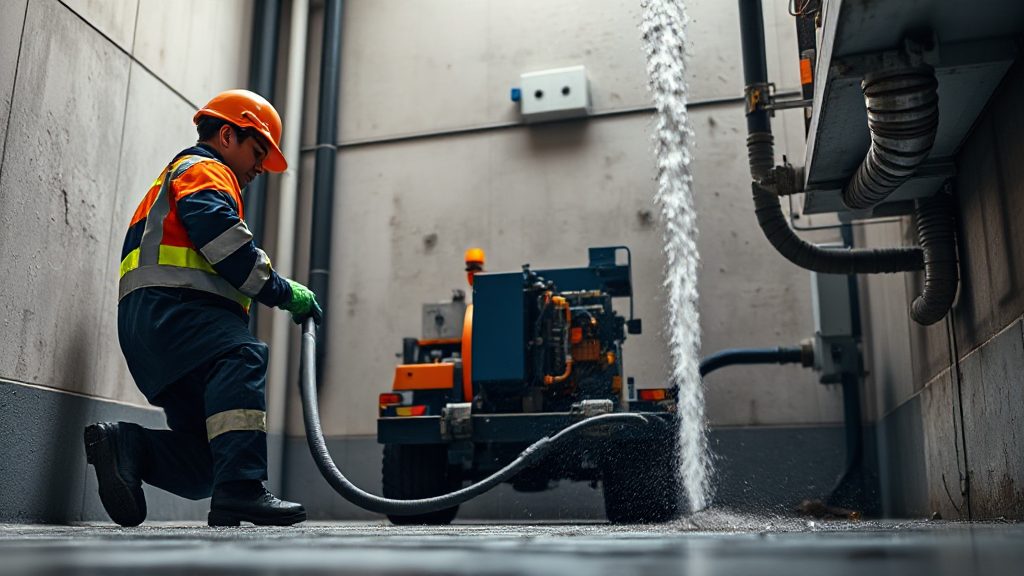
The equipment on site tells you a lot about the job. A manual auger is a hand-cranked cable used for short, simple clogs close to the drain. An electric drain snake is a motorized version that can travel several meters into a branch line. A hydro-jetter is a truck-mounted or portable unit that blasts water at high pressure to clean the full pipe circumference. For sewage backups or grease traps, a vacuum truck may be needed to remove the waste before cleaning. In Saúde, narrow streets and older buildings sometimes mean the truck stays on the main road while the technician runs hoses to the access point.
What Affects the Total Time and Cost
Several factors push a job from one hour to several. Pipe material matters: older galvanized steel or cast iron can be rough inside and hold debris, while PVC is smoother and faster to clear. Access matters too, because a cleanout hidden behind a wall or under a slab adds setup time. Distance from the street to the blockage affects how much hose or cable is needed. On the cost side, a straightforward fixture unclog is the least expensive, while hydro-jetting, camera inspection and after-hours emergency calls add to the bill. A desentupidora Saúde São Paulo SP should explain these variables before starting, so there are no surprises at the end.
Common Beginner Mistakes to Avoid
The biggest mistake is pouring chemical drain cleaner into a fully blocked line. If the water cannot move, the chemical sits in the pipe and can damage seals or splash back when the clog finally releases. Another common error is continuing to use fixtures after the first sign of backup, which can push dirty water into other drains. Do not ignore a slow drain that clears on its own, because that usually means a partial blockage is growing. Finally, avoid hiring someone who cannot describe their equipment or refuses to give a written estimate. A professional team will explain the method, the expected time and the price range before work begins.
Preventing the Next Blockage in Your Building
Prevention is cheaper than any emergency call. In kitchens, avoid pouring cooking oil down the sink; let it cool and dispose of it in the trash instead. Use drain strainers in showers and sinks to catch hair and food scraps. For buildings in Saúde with shared stacks, schedule periodic hydro-jetting of main lines rather than waiting for a backup. If your property has a septic tank, arrange regular pumping before solids build up. A short preventive visit every year or two can catch grease and root problems while they are still small.
My Recommendation for First-Timers
If this is your first time dealing with a blocked drain, start by calling a professional rather than experimenting with chemicals or borrowed tools. Describe the symptoms clearly, ask what equipment will be used and request an estimate before the technician begins. Keep the access point clear and move fragile items away from the work area. For routine clogs, a qualified team will usually finish within a couple of hours; for heavier main-line work, plan for half a day. The safest path is to book a service that handles both small unclogs and larger hydro-jetting jobs, so the same team can scale up if the problem turns out to be bigger than expected.
 admin